
Why Profitable Businesses Can Still Run Out of Cash
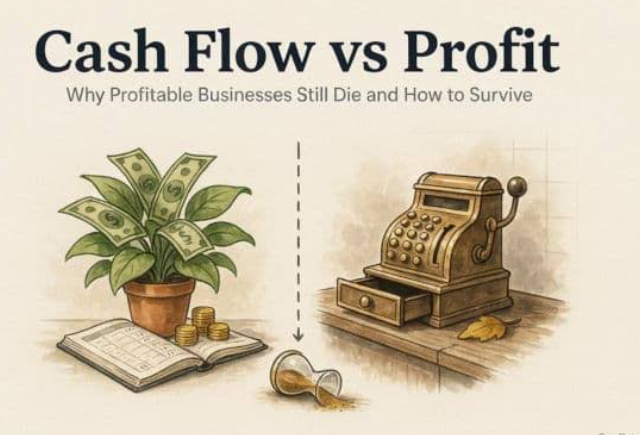
Many business owners assume that if their company is profitable, it must also be financially healthy. Unfortunately, that's one of the most common and costly misconceptions in business.
Every year, profitable companies across nearly every industry struggle to pay employees, cover rent, purchase inventory, or meet loan obligations. Some even close their doors despite posting strong sales and healthy profit margins.
How is that possible?
The answer lies in one critical concept: cash flow.
Profit and cash are not the same thing. A business can generate significant profits on paper while simultaneously facing a cash flow crisis that threatens its survival. In fact, many business failures occur not because a company isn't profitable, but because it doesn't have enough cash available to meet its financial obligations when they're due.
Understanding why profitable businesses run out of cash can help you avoid financial pitfalls, make smarter decisions, and recognize when it's time to seek professional debt relief, especially if you've relied on Merchant Cash Advances (MCAs) to bridge funding gaps.
Profit Doesn't Equal Cash
One of the biggest financial misunderstandings among small business owners is confusing profitability with available cash.
Profit is what's left after subtracting expenses from revenue.
Cash flow is the actual movement of money into and out of your business bank account.
A business can report impressive profits on its income statement while having very little cash available to pay employees, vendors, taxes, or debt. This disconnect is why lenders, investors, and financial professionals often place just as much emphasis on cash flow as they do on profitability.
For example:
- A contractor completes a $100,000 project.
- The invoice is due in 90 days.
- The project appears profitable on the income statement.
- But payroll, suppliers, insurance, fuel, and equipment costs must be paid today.
Until that customer pays, the business has earned a profit, but doesn't have the cash.
This disconnect is why cash flow management is often more important than profitability when evaluating a company's financial health.
Common Reasons Profitable Businesses Experience Cash Flow Problems
1. Customers Pay Too Slowly
Late payments are one of the biggest causes of cash shortages.
Many industries routinely wait:
- 30 days
- 60 days
- 90 days
- 120+ days
to receive payment.
Meanwhile, business owners continue paying:
- Payroll
- Rent
- Utilities
- Insurance
- Taxes
- Vendors
- Fuel
- Equipment expenses
Even highly profitable companies can struggle when receivables pile up because revenue on paper doesn't translate into cash in the bank until invoices are actually paid.
2. Rapid Growth Consumes Cash
Growth is exciting—but it's expensive.
As revenue increases, businesses often need to invest in:
- Additional employees
- Larger facilities
- Inventory
- Vehicles
- Equipment
- Marketing
- Software
- Training
These costs occur before the additional revenue is collected.
Ironically, many fast-growing businesses experience severe cash shortages because growth requires substantial upfront investment.
3. Too Much Money Is Tied Up in Inventory
Retailers, manufacturers, wholesalers, and distributors frequently have thousands, or even millions, of dollars sitting on warehouse shelves.
Inventory may eventually generate revenue, but until it sells, it represents cash that can't be used elsewhere.
Excess inventory often leads businesses to borrow money simply to cover operating expenses.
4. Large Debt Payments Drain Working Capital
Business debt requires regular payments regardless of sales performance.
Common obligations include:
- Equipment loans
- Lines of credit
- SBA loans
- Commercial mortgages
- Vehicle financing
- Merchant Cash Advances
When monthly or daily payments become too large, they reduce the cash available for normal operations.
Even profitable businesses can become cash-starved if debt obligations consume too much working capital.
Merchant Cash Advances Can Create a Cash Flow Trap
Many business owners turn to Merchant Cash Advances because they're easy to qualify for and provide quick funding.
An MCA can solve an immediate cash shortage.
Unfortunately, it can also create a much larger financial problem.
Unlike traditional business loans, many MCAs require:
- Daily ACH withdrawals
- Weekly automatic payments
- High factor rates
- Frequent renewals
- Stacking multiple advances
Daily withdrawals reduce available cash every single business day.
As cash becomes tighter, many owners take another MCA to cover expenses.
This creates a cycle where new financing is used to repay old financing rather than invest in business growth.
Eventually, even profitable businesses struggle to keep up. Instead of supporting growth, the debt begins consuming working capital, making it increasingly difficult to cover payroll, purchase inventory, invest in marketing, or build cash reserves.
Seasonal Businesses Face Unique Cash Flow Challenges
Many companies earn most of their revenue during only part of the year.
Examples include:
- Landscaping companies
- Roofing contractors
- Hospitality businesses
- Tourism companies
- Retailers
- Construction firms
These businesses may earn excellent annual profits while experiencing several months of limited cash flow.
Without proper planning, owners often rely on expensive financing to survive slow periods.
Large Expenses Don't Always Match Revenue
Business expenses don't occur evenly throughout the year.
Unexpected costs can include:
- Equipment breakdowns
- Vehicle repairs
- Tax payments
- Insurance renewals
- Legal expenses
- Technology upgrades
When several large expenses arrive simultaneously, cash reserves can disappear quickly.
Even profitable businesses can struggle if they haven't built adequate emergency reserves.
Overestimating Available Cash
Many owners review their bank balance and assume all available funds are free to spend.
In reality, that money may already be committed to:
- Upcoming payroll
- Quarterly taxes
- Vendor payments
- Rent
- Insurance
- Debt payments
Without detailed cash flow forecasting, businesses often spend money they will soon need.
Weak Cash Flow Forecasting
Many small businesses prepare profit-and-loss statements but never create a cash flow forecast.
A cash flow forecast estimates:
- Expected customer payments
- Upcoming expenses
- Payroll
- Debt payments
- Tax obligations
- Seasonal fluctuations
Forecasting allows owners to identify potential shortages weeks, or even months, in advance.
Without it, financial surprises become much more likely.
Warning Signs Your Business Is Running Out of Cash
Watch for these early indicators:
- Frequently delaying vendor payments
- Using credit cards for operating expenses
- Borrowing money to make payroll
- Stacking multiple Merchant Cash Advances
- Declining bank balances
- Constant overdraft fees
- Falling behind on taxes
- Paying bills later each month
- Difficulty purchasing inventory
- Stress over daily ACH withdrawals
Ignoring these warning signs can allow a temporary cash shortage to evolve into a much more serious financial crisis. In severe cases, businesses that remain profitable on paper may still become insolvent because they simply don't have enough available cash to meet their obligations.
How to Improve Business Cash Flow
Healthy cash flow requires proactive financial management.
Some proven strategies include:
Speed Up Accounts Receivable
- Invoice immediately.
- Offer electronic payment options.
- Follow up on overdue invoices.
- Consider early payment incentives.
Control Inventory
Avoid purchasing more inventory than necessary.
Monitor inventory turnover and identify slow-moving products.
Reduce Unnecessary Expenses
Regularly review subscriptions, software, vendor contracts, and recurring expenses.
Small savings often add up significantly over time.
Build Cash Reserves
Setting aside even a small percentage of monthly profits can help absorb unexpected expenses without borrowing.
Monitor Cash Weekly
Rather than reviewing financials monthly, track:
- Cash balances
- Receivables
- Upcoming obligations
- Debt payments
Weekly monitoring helps identify issues before they become emergencies and provides greater visibility into your company's financial health.
When Debt Becomes the Problem
Sometimes cash flow problems aren't caused by poor management.
Instead, they're caused by overwhelming debt obligations.
Businesses with multiple Merchant Cash Advances often discover that daily withdrawals leave too little cash to:
- Hire employees
- Purchase inventory
- Market the business
- Expand operations
- Build reserves
In these situations, simply increasing sales isn't enough.
The debt itself has become the primary obstacle to healthy cash flow, and continuing to borrow often only deepens the problem.
Merchant Cash Advance Relief Can Help
If your business has become trapped by multiple Merchant Cash Advances, relief may be possible.
Professional MCA relief services can often help businesses:
- Reduce payment obligations
- Negotiate with MCA providers
- Consolidate financial obligations where appropriate
- Improve monthly cash flow
- Create a path toward long-term financial stability
Taking action early often provides more options than waiting until defaults or lawsuits occur.
Take Control of Your Business's Cash Flow
A profitable business should have the opportunity to grow, and not struggle under the weight of daily debt payments and constant cash shortages.
If Merchant Cash Advances are draining your working capital and making it difficult to operate, you don't have to face the challenge alone.
Creditors Relief helps business owners explore solutions for overwhelming MCA debt. Our experienced team works with businesses across a wide range of industries to negotiate with MCA providers, reduce financial pressure, and help restore healthy cash flow.
Contact Creditors Relief today for a free, confidential consultation and learn how our Merchant Cash Advance relief solutions can help your business regain financial stability, improve cash flow, and focus on long-term growth.
This article is for general information only and is not legal or financial advice. Creditors Relief, LLC is a commercial debt restructuring company, not a lender and not a law firm. We do not advise clients to stop making payments. Laws referenced are current as of 2026 and vary by state; if a judgment or lien has been filed against you, consult a qualified attorney about your specific situation. Results vary by client, funder, and circumstance and are not guaranteed.